 Request a quote
Old Town of Lijiang
 Li Yufei
 Jan 8, 2026
A World Cultural Heritage Site Lijiang Ancient City is located in Gucheng District of Lijiang City, Yunnan Province, and lies in the middle of Lijiang Basin at an altitude of about 2,400 meters. Backing onto Jade Dragon Snow Mountain, it is a settlement of the Naxi Ethnic Group and one of the two ancient cities in China that have been successfully inscribed on the World Heritage List as an entire city (the other is Pingyao Ancient City). First built in the late 13th century (the late Song and early Yuan dynasties), the city has a history of over 800 years. It gets its name from the Jinsha River, which was called Lijiang in ancient times. In the Naxi language, it is known as "Gongbenzhi", meaning "a hub for grain storage and distribution".
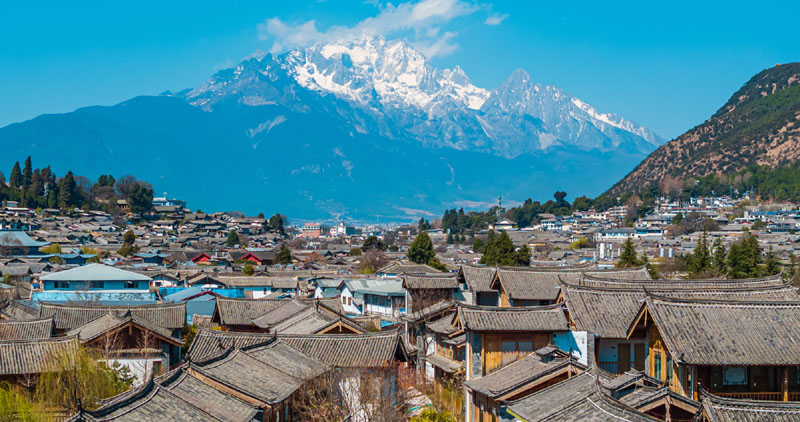
On December 4, 1997, Lijiang Ancient City was inscribed on the World Heritage List at the 22nd session of the UNESCO World Heritage Committee. Its core protection area includes Dayan Ancient City (including Black Dragon Pool), Baisha Residential Complex and Shuhe Residential Complex, covering a total area of 7.279 square kilometers. UNESCO commented that it is "a typical example of the wonderful combination of strong local ethnic characteristics and natural beauty", and specifically noted that its "ancient water supply system is ingeniously designed and still in effective operation".
One of the most distinctive features of Lijiang Ancient City is that it has no city walls, which is extremely rare among ancient cities. It is said that the ruler of the ancient city surnamed Mu, and building city walls would form the Chinese character "Kun" (meaning trapped), so no walls were built. Meanwhile, this also facilitated the free entry and exit of caravan teams on the Ancient Tea Horse Road from all directions. Centered on Sifang Street, the ancient city has four main roads extending in all directions, forming a spider web - like street layout. All the streets are paved with red breccia (colorful stone), which keeps the ground from being muddy in rainy seasons and dusty in dry seasons.
The water system project of the ancient city is hailed as a miracle. Meltwater from Jade Dragon Snow Mountain forms a water source through Black Dragon Pool, and then flows through the whole city via artificially dug ditches, creating a unique landscape of "Every household has running water passing by and weeping willows hanging overhead". There are numerous bridges in the city. Dayan Ancient City alone has 354 bridges of various forms, among which the Great Stone Bridge, Wanzi Bridge and South Gate Bridge built in the Ming Dynasty are the most representative. These bridges not only facilitate transportation, but also are important components of the architectural art of the ancient city.
In terms of architectural style, Lijiang Ancient City integrates the cultural characteristics of multiple ethnic groups such as the Han, Bai, Yi and Tibetan, forming a unique Naxi architectural art. Most of the dwellings are courtyard - style buildings of civil structure, such as "Three - courtyard with a screen wall" and "Four - courtyard with five patios". With blue tiles and white walls, and carved doors and windows, these buildings not only adapt to the characteristics of the plateau climate, but also show exquisite craftsmanship. The Mufu Mansion, a landmark building of the ancient city, is known as the "Little Forbidden City". It was the mansion of the Tusi of Lijiang in the Ming Dynasty. Its buildings are magnificent, integrating the architectural style of the Central Plains in the Ming Dynasty with the traditional craftsmanship of the Naxi people. The Wanjuan Building houses a large number of precious Dongba ancient books and documents.
Lijiang Ancient City is an important hub on the Ancient Tea Horse Road. During the Ming and Qing dynasties, it became a distribution center for materials in northwest Yunnan. Horses and medicinal materials from Tibet and tea and salt from Yunnan converged here, promoting the cultural integration of multiple ethnic groups. It is also the center of the Dongba Culture of the Naxi people. As the only pictographic writing still in use in the world, Dongba characters record the history, religion and culture of the Naxi people. Dongba scriptures, Dongba paintings, Dongba music and so on are all treasures of human civilization. Among them, Dongba ancient books and documents have been inscribed on the Memory of the World Register.
Having gone through the vicissitudes of time, especially after the "2·3" Lijiang Earthquake in 1996, the basic pattern of the ancient city remains unchanged, the core buildings are preserved, and the restoration and reconstruction are carried out according to the original appearance, thus maintaining the authenticity of history. Today, Lijiang Ancient City holds many honors such as World Cultural Heritage, National Historical and Cultural City and National 5A - level Tourist Attraction, becoming a tourist resort yearned for by Chinese and foreign tourists. Meanwhile, it is also a model of "living heritage", where the ancient Naxi culture still radiates vitality in modern life.